























American high schoolers go to sleep each night and wake up each morning dreading the prospect of going to school.
After waking up with the sun, working out or running, heading to school, attending clubs, completing homework, studying for upcoming tests and doing sports, most go to bed exhausted, only to wake up the next morning, forced to do it all again.
K-12 education is a crucial developmental time for children. This is where they learn invaluable academic and social skills. However, all the indicators suggest that the American education system is failing its children. Thirteen-year-olds in the U.S. had the poorest performance on the NAEP, a federal standardized test, in years.
While the pandemic certainly played a role in America’s rapidly declining educational standards, many alternative factors continue to be brushed aside in the face of easier, more straightforward explanations. The truth is, the American system is failing for many reasons, and it will never be perfect.
An overreliance on standardized testing, too much time in the classroom and the overuse of technology are only a few of the prevalent issues undermining education in the U.S.
To improve, America must adapt and learn from countries experiencing greater success educating the next generation.
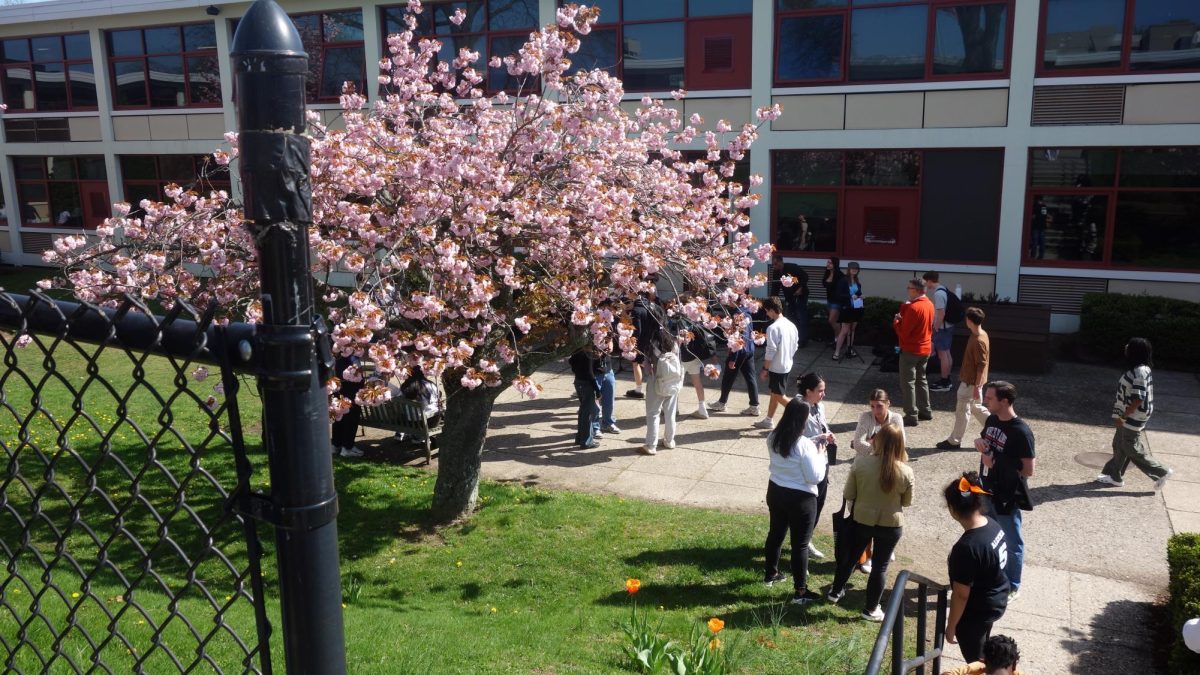
There is a wealth of research to show that physical movement and time spent outside is just as vital as time spent in the classroom. The integration of under-desk pedals into classrooms provides a window into the U.S.’s skewed priorities regarding the education of its children.
Jocelyn Shoop, a health and physical education teacher at Dayton Elementary School, said, “The desk pedals are popular with students, who often get restless, and teachers, who have to manage fidgety kids.”
Movement and physical activity are essential not only to children’s development of fine and gross motor skills but also to their mental well-being. Children are, biologically, not supposed to be sitting at a desk for hours on end, and integrating under-desk pedals into classrooms is like putting a Band-Aid on a gunshot wound.
As Ken Robinson, a British author and speaker and an advocate for educational change, said in one of his TED Talks, “If you sit kids down hour after hour doing low-grade clerical work, don’t be surprised if they start to fidget, you know?”
In Finland, a country with one of the best education systems in the world, children don’t start school until they are 7 years old.
“They’re given free rein in the developing childhood years to not be chained to compulsory education,” as stated in an article on why Finland’s educational system is thriving.
Children are vibrant creatures. They are bursting with energy, creativity, imagination and innovation. People often underestimate children’s natural curiosity and hunger for knowledge.
However, our stilted education system smothers the wonder of learning and the satisfaction of rigorous achievement.
“Children are natural learners. It’s a real achievement to put that particular ability out, or to stifle it,” Robinson said.
Continually, this overload of schoolwork, due dates and testing leads to pressure on teachers to teach to the test, overlooking the point of school: to learn.
“What often happens is that students will learn to cram just to pass a test and teachers will be teaching with the sole purpose of students passing the test. Learning has been thrown out of the equation,” the article about Finland’s thriving education system stated.
This convoluted idea of “learning” places an obscene amount of stress on students. People say that pressure makes diamonds; however, most rocks are simply crushed. We have created a system that is “predicated on academic ability,” according to Robinson, leaving those with different skill sets to struggle in an environment that doesn’t suit them.
Furthermore, Robinson argued in another one of his TED Talks, we are educated out of creativity, not into it.
“We stigmatize mistakes. And we’re now running companies where mistakes are the worst thing you can make,” Robinson said.
Finland, contrary to the U.S., does not employ standardized tests, save for one exception, and Finnish children are graded on an individual basis using a grading system set by their teacher.
Finally, the introduction of technology into American schools, while meant to further learning, has increasingly been found to do the opposite.
Thirty billion dollars a year is spent on American educational technology. The benefits have yet to materialize. The rapid integration of technology into the American school system is widely debated, but the vast majority of research shows that it does more harm than good.
Having technology that can do your work for you within arm’s reach at all times devalues students’ effort and hard work and, in the long term, can undermine education as a whole.
Dana Goldstein, a New York Times national correspondent, wrote, “Mistaken ideas about the nature of learning have combined with a hefty dose of Big Tech propaganda to distort our picture of what school is for.”
A country as prosperous as America, with all the resources at its disposal, should have an education system among the best in the world. However, as the nation continues to fall behind, it must rethink why it educates and, in doing so, reform the system that fails millions of children each year.