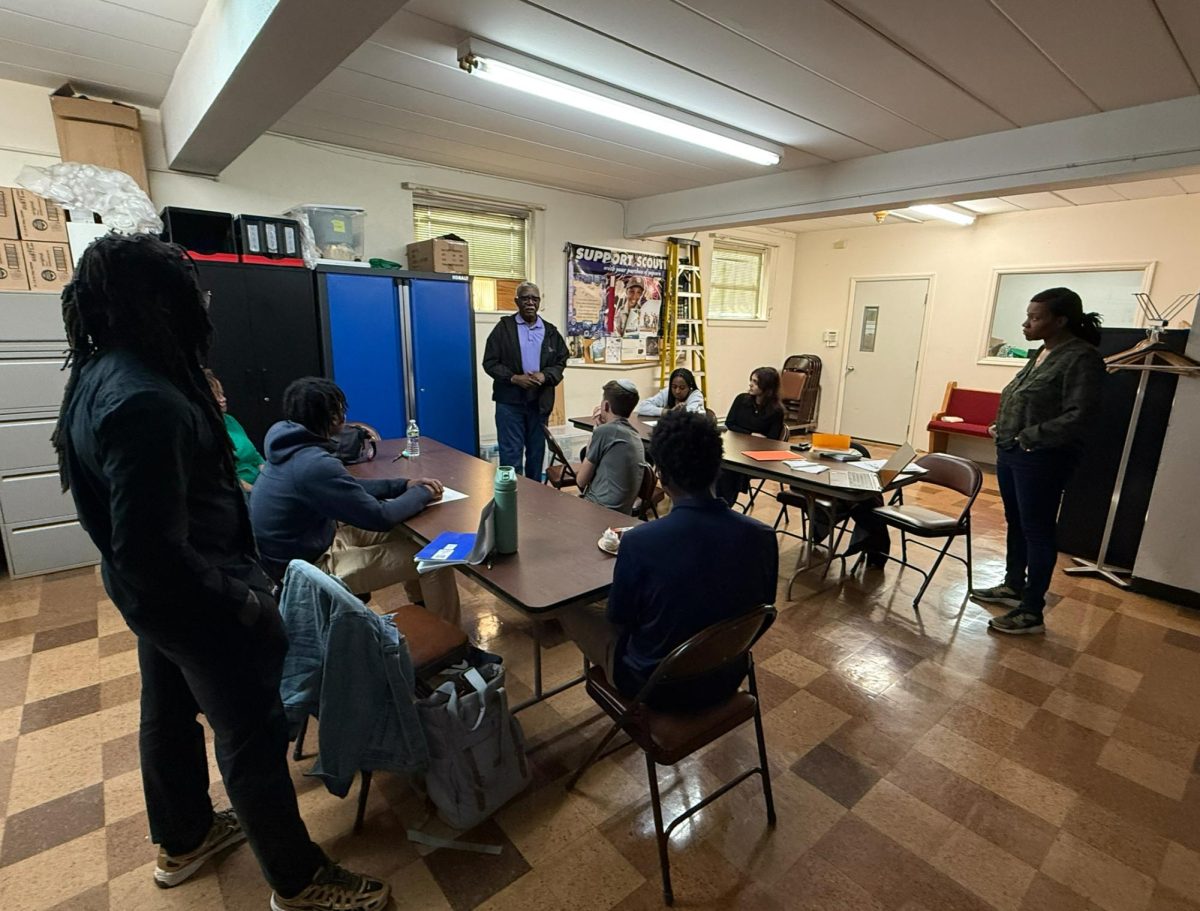











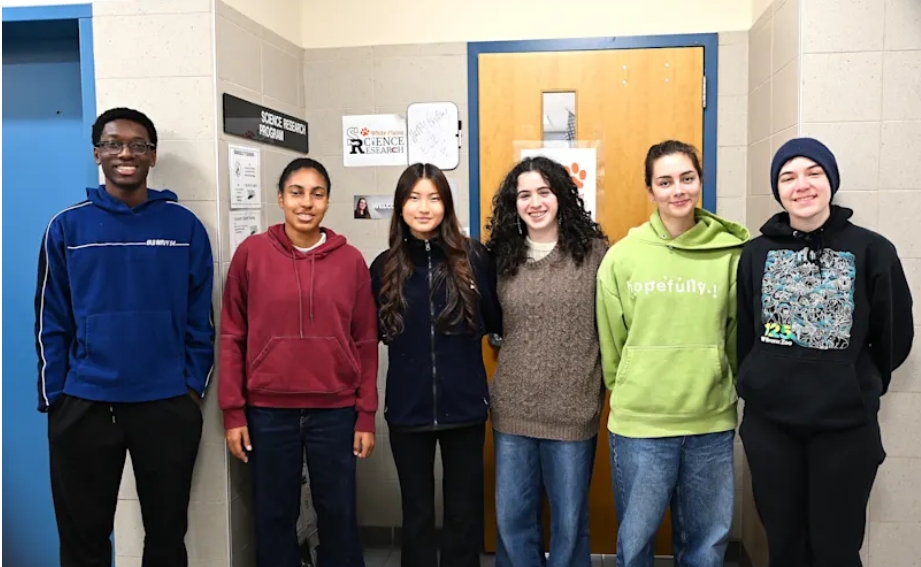
The seniors in the Science Research program have submitted their final papers and are prepared for competition—the final stage of the rigorous three-year honors science elective.
In the Science Research program, students spend their sophomore year doing extensive background research on a specific topic, identifying a gap in the literature and developing a research proposal. Their junior year, they conduct their study and collect data. Senior year is when it all comes together: each student is expected to submit a final, publication-worthy research paper.
These papers are not simply reviews of research that has already been done. Students in the program identify a gap in the literature—something that hasn’t been studied before—and fill it. This can mean anything from sending out a survey connecting mental health to dancing, as senior Deya Allen did, to working with mice in a lab.
Allen completed her project, entitled Studying the Effects of Meditation on Dancers’ and Nondancers Mental Health, a year ahead of schedule. This allowed her to start competing in science fairs her junior year. She credits her early success to the fact that science research classes are mixed-grade.
“Because of the integrated classes, I was able to learn what the seniors were learning on how to analyze my data, and by the time the major science fairs rolled around, I got to compete with the seniors,” Allen said.
Particularly well-designed and well-conducted studies can even be published in scientific journals alongside professionals.
Sofia Bertini, another senior in the program, reflected that the most valuable thing that Science Research gave her was “exposure to research before college.”
Bertini is studying multiple sclerosis in her study Investigating the Possibility of Using the Optic Nerve as a Biomarker for Multiple Sclerosis in the Context of Moroccan Patients, and hopes to continue this line of research in the future.
Seven of the seniors in the program—Eliana Lieber, Sofia Bertini, Jordan Ford, Francis Fokoue Nkoutche, Olivia Tuzel, Charis Choi and Deya Allen—recently applied to the Regeneron Science Talent Search (STS), one of the most prestigious STEM competitions in the country. Of the 2,500 submissions, 300 are chosen as semifinalists and receive $2,000. Of those, 40 win $25,000 and a trip to Washington, D.C. to present their work. There, they compete for the coveted $250,000 top prize.
Thirteen STS participants have gone on to win Nobel prizes.
Next, all seniors applied to the Westchester Science and Engineering Fair (WESEF). They submitted their research paper, research plan and a myriad of approval forms, a feat in itself. They will go on to present posters of their project at the science fair in March. Winners advance through state and national fairs and eventually to the International Science and Engineering Fair (ISEF), the crown jewel of all Science Research students’ dreams.
Allen realized just this year how important Science Research has been to her high school career, and recognizes that conducting original research in high school is “a huge accomplishment.” She hopes to “be a role model for the first and second years,” just as the upperclassmen were for her.
A huge congratulations is in order for the Science Research seniors, whose hard work throughout the last three years is paying off.