



























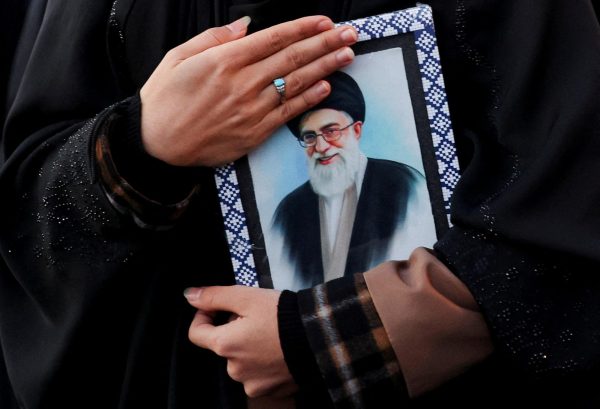
The U.S. and Israel launched strikes against Iran on Saturday, killing several high officials, including Supreme Leader of 37 years Ayatollah Ali Khamenei. Ali Shamkhani, the head of the National Defense Council, Mohammad Pakpour, commander-in-chief of the Islamic Revolutionary Guards Corps. and Aziz Nasirzadeh, the defense minister, were also killed. The deaths of so many top Iranian officials could leave a dangerous power vacuum in an already turbulent region.
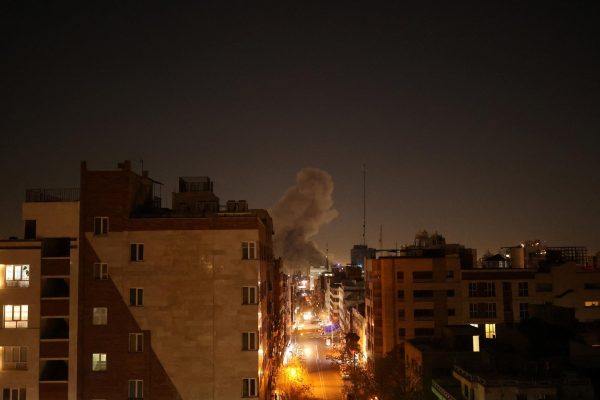
It is unclear exactly how many Iranians were killed in the strikes, but fatalities number in the several hundreds. At least 153 people, including children, were killed in an explosion at a girls’ school in Southern Iran. Areas targeted include the Tehran, Karaj, Isfahan, Qom and Kermanshah.
Iran has launched retaliatory strikes against Israel and U.S. assets in the Middle East, including Bahrain, Kuwait, Qatar, the United Arab Emirates and Jordan. Several people have been killed, and significant damage has been done by debris left by intercepted Iranian missiles.
Three U.S. service members were killed and five more severely injured. Trump has stated that he expects these numbers to rise.
Britain, France and Germany released a joint statement expressing their willingness to work with the U.S. to stop Iran’s retaliatory strikes.
These attacks follow weeks of U.S. threats of attack unless Iran agreed to U.S. constraints on their nuclear program. Iran has repeatedly insisted that the nuclear program was intended only for peaceful purposes. A final round of diplomatic discussion just two days ago yielded no major breakthrough.
Trump stated that the aim of the attacks, dubbed Operation Epic Fury, was to “ensure that Iran does not obtain a nuclear weapon.”
Iranian-U.S. tension dates back to the 1979 revolution which toppled the U.S.-installed Shah and turned Iran from a close ally to a bitter foe. The U.S. bombed Iran less than a year ago during its attacks on three nuclear sites in June.
Israel, led by Prime Minister Benjamin Netanyahu, has long seen Iran and its nuclear program as an existential threat.
These attacks come during a turbulent time for Iran. In January, the Iranian government met massive anti-theocracy demonstrations with lethal force, killing thousands of protesters. Trump has urged the Iranian people to use this opportunity to rise up and take over their government.
Trump’s use of force in Iran is a continuation of a debate that dates back to the Cold War over presidential war powers. If this is truly a declaration of war, Trump would need congressional approval. However, presidents in the past have started wars on their own, arguing that their position as commander-in-chief of the armed forces authorizes them to act in the nation’s best interests without asking Congress.
In Trump’s case, many argue that it is unconstitutional of him to attack Iran without explicit congressional approval. Others point to countless historical examples, including Trump’s own attacks on Venezuela, as evidence that a president’s commander-in-chief power trumps Congress’s right to declare war.
Due to the conflict, oil is likely to be blocked from leaving the Middle East. The price of oil has already risen as much as 13%, and consumers are likely to see increases in the price of gasoline and other fuels.