


























What if you could store something for thousands of years without it ever degrading?
Well, now you can…sort of.
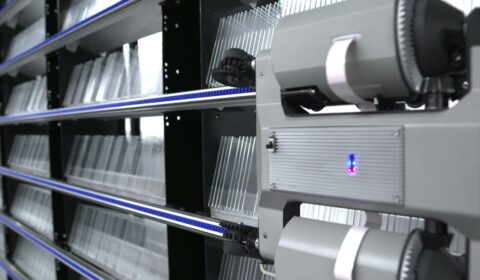
Researchers at Microsoft have developed a new technology that stores digital data inside solid glass slabs. The project, called Project Silica, uses powerful ultra-fast lasers to write tiny structures—so small they’re invisible to the human eye—inside quartz glass.
Instead of saving information on hard drives or fragile discs, Microsoft’s system encodes the data in 5D. Three of those dimensions are the physical location of the tiny dots inside the glass. The two others involve how light moves through those dots. When scientists shine specialized light through the glass, they can read the data back with extreme accuracy.
Are there any downsides of using this data storage method?
One major limitation of this method is that once the data is written into the glass, it cannot be erased or changed.
Another downside is speed. Writing and retrieving data from glass is currently much slower than modern solid state drives or hard drives. This means it would not be practical for everyday use like storing apps or games.
What is the point of storing data on glass then?
Storing data on glass allows it to be preserved for thousands of years. The main goal is preserving scientific research and history for future generations. While the technology is still under development, it could potentially revolutionize how we store data in the future.