

























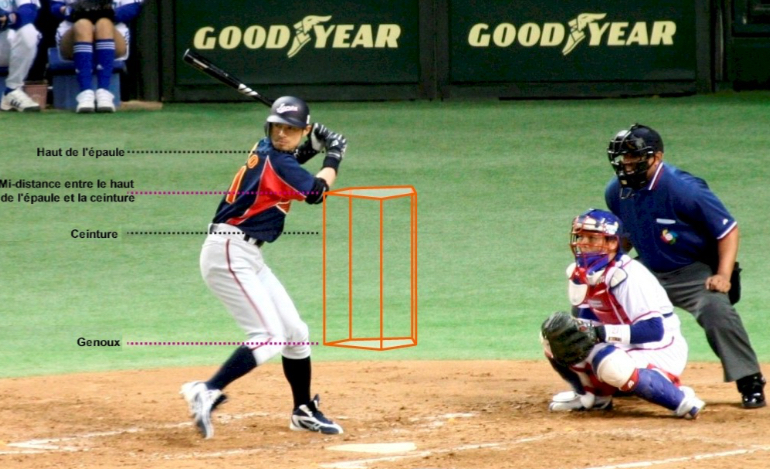
What even is a strike in baseball? History suggests that the strike zone extends from the letters (upper chest) to the knees, but this can vary drastically by player. For instance, 5’6 Jose Altuve’s zone would be much smaller by this definition than 6’7 Aaron Judge’s. One could call it an imaginary flat rectangle, like the overlays seen on nearly every broadcast, but home plate is a pentagon that also has depth.
Enter ABS, the Automated Ball-Strike System causing chaos, both good and bad, across the baseball world. For the first time in MLB history, after years of testing in the minor leagues, balls and strikes can be challenged by hitters, pitchers and catchers. Many love it and many hate it, but it provides another layer of both controversy and excitement for all baseball fans alike.
The ABS rules are simple: two challenges per team, a failed challenge results in a permanent loss of one challenge for the rest of the game. A successful challenge allows the team to keep that same said challenge, meaning successful challenges could go on forever, as long as they stay correct.
The Good: Fans Love It
Take a guess: would fans cheer louder for a walk off hit or back-to-back successful ABS challenges? Well, Cincinnati Reds fans on March 28 for an inter-league game against the Red Sox have something to say about that. Notoriously questionable caller behind the plate C.B. Bucknor had an absurd six calls overturned in a 6-5 Reds win, and social media adored the energy.
Similar to professional soccer, where VAR (Video Assistant Referee) can assist referees for decision making, fans often erupt in elation or dissatisfaction when calls are made by fractions of inches.
To keep the good times rolling, overturned calls have prevented unfortunate umpire errors from dictating game outcomes. Many remember Kyle Schwarber’s tantrum over a game-losing call just three years ago. Thankfully, these results can be prevented, and through Statcast’s runs-based metric, the Minnesota Twins in particular have added an outstanding value of +4 runs in such a short sample size.
The Bad: The Downfall of Pitch Framing
Catchers such as Patrick Bailey and Austin Hedges have built careers off pitch framing, essentially tricking umpires by moving the position of where the ball is caught into the strike zone. Players like these have abysmal offensive production, and in an era where pitch tracking can be perfect, the value of pitch framing declines. In 2025 alone, through Baseball Savant’s Catcher Framing Leaderboard, Bailey added approximately 27 runs for the San Francisco Giants throughout the year.
If ABS continues to be a league-wide success, then “Robo-umps” could become a mainstay in baseball, ultimately removing the value of the Baileys and Hedges of MLB.
On top of this, ABS does disrupt the flow of games, making the game seem ever so slightly more artificial. Fourteen-year veteran pitcher, Sonny Gray, has stated his displeasure with the ABS challenge system. Although acknowledging players like himself need and will learn to adapt, he doesn’t shy away from stating that he’s “not a fan.”
So, what’s next for baseball? Will Robo-umps become a full-time mechanism, removing multi-century-long traditions? Only time will tell, as the MLB braces for the potential 2027 lockout.
